The project nobody can find in the system
by Daniel Rockenschaub3 min read
Customers and jobs have the CRM. The company's own initiative — a new website, a warehouse rebuild, a certification — suddenly gets a second tool nobody else opens.

For a customer, there's a job in the system, with everything attached toit. For the company's own initiative — rebuilding the warehouse, a newwebsite, preparing for a certification — a second program often gets setup. A board, a spreadsheet, sometimes just a sheet of paper on a pinboard.
That's quick to set up at first. A few weeks in, almost nobody logs into it anymore, because the daily work happens in the other program.
How you notice the internal project is sinking
A few signs repeat in almost every business running a separate tool forinternal initiatives:
- Asked how the warehouse rebuild is going, the answer is a glance at a tool nobody has opened in two weeks.
- Tasks from the project and tasks from day-to-day work compete for the same time but never show up on one shared list.
- Someone working on the project but not in the extra tool daily only hears about changes secondhand.
- A milestone gets reached, but nobody outside the project team notices, because it shows up nowhere else.
- By the end of the quarter, it's unclear how much time actually went into the project versus day-to-day work.
On its own, none of this is dramatic. Together, it's why internal projects stall more often than customer jobs — jobs have a fixed place in the system, the project doesn't.
What it actually costs
Not the extra app — it's often even free. What's expensive is the attention a project needs when it doesn't live where the work already happens. Every switch to the extra tool is a small hurdle, and over a quarter, that hurdle is enough for the project to lose out against day-to-day work.
A project that needs its own login isn't competing with day-to-day work —it's losing to it before it even starts.
A simple check
List the internal projects currently running — and next to each one, note which program it's managed in and how long ago the last entry there was. Often it turns out: projects living in the same system as day-to-day workstay current. Projects in their own app less often do.
To be fair: a business running very large, multi-year programs with their own governance will need specialized project controls regardless. For most internal initiatives a business runs — a rebuild, a rollout, preparation for something — a board in the same system as everything else is enough.
How this looks in Nexoro
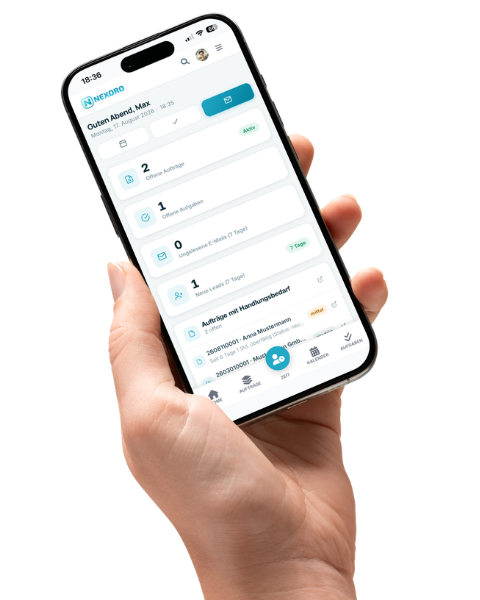
Project management in Nexoro sits above jobs, in the same system, with the same members: a board and backlog for tasks, active sprints and milestones for progress, plus a status overview, due dates and activity history at a glance. The team plan shows who's available when — including holiday, sickleave and special cases — and the resource plan does the same for vehicles and machines. Because the project lives in the same system as customers, jobs and the calendar, its status is visible to everyone already logged in— no second login, no second password. If you want to see what your next internal project would look like in it, tell us what it's about.